Key skills
Being a geoscientist require a multi-disciplinary approach and a wide range of skills. The key skills are listed below.
Field work
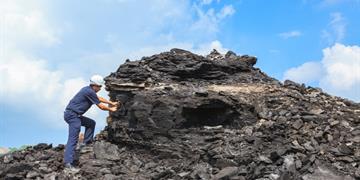
Field work is a big part of being a geoscientist and is often the most fun. During field work geoscientists will visit the area of interest where they make detailed notes on the types of rocks and their structure. Samples of rocks are often taken while in the field for further study back in the lab. This data along with observations on the surroundings such as recent sediment layers or fossils present, are compiled into a geological map.
Mapping

Another key skill for a geoscientist is mapping. This can be field mapping as described previously or examination of geotechnical maps to see if the land is suitable for certain uses.
Lab Work

Lab work is vital to the work of a geoscientist. Samples taken while in the field need to be analysed. This lab work ranges from using high powered microscopes to look at the detailed structure of the rock, to geochemical tests that investigate the chemical properties of the sample and radiometric age dating of the sample.
Alternative field work

Other forms of field work include sea and air surveys. In these cases geophysical data such as magnetic, gravitational and electromagnetic properties are all examined.
Computer based work
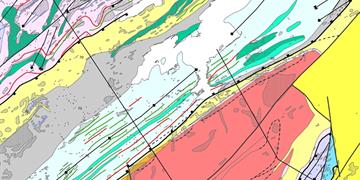
All of the data gathered is analysed and computer based models are generated. These models are 3-D maps that show the structure and composition of the area of interest.
Report writing

All of this fieldwork and analysis has to be compiled into a report that summarises the findings of any survey.