ISC Lecture Series Webinar 3 Prof. Chen Jun
ISC Lecture Series Webinar 3 – “Geospatial Information-Enabled SDGs Monitoring”
You can regsiter online HERE

The 2030 Agenda for Sustainable Development aside from providing a framework to sustainability and equality, can also represent how to better link basic science and education with issues such as climatic and environmental change, water and energy security, ocean preservation, disaster risk and other existential risks to living sustainably on planet Earth. While we celebrate the International Year of Basic Sciences for Sustainable Development (IYBSSD), it is important to recognize the contribution basic science can make to the implementation of the 2030 Agenda. The International Year, promulgated by the United Nations, encourages exchanges between scientists and all categories of stakeholders, whether from grassroots communities or political decisionmakers and international leaders, to associations, students and local authorities.
To promote discussion and debate around these issues, the ISC will convene three online webinars on 21 February, 21 March and 18 April 2023, to discuss rethinking environmental security for the 21st century; disaster risk reduction and interdependencies between vulnerability, exposure, and hazards; and how we can consider the SDGs and the 2030 Agenda from a data-driven geographical perspective. Our speakers, Simon Dalby, Irasema Alcántara-Ayala and Chen Jun invite you to engage this conversation.
Webinar 3 : “Geospatial Information-Enabled SDGs Monitoring”
Chen Jun
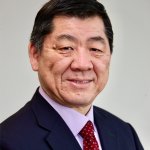 |
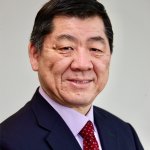
Professor/Chief Scientist at the National Geomatics Center of China, Beijing, China Chen Jun is the past president of ISPRS. As a leading scientist affiliated with National Geomatics Center of China, he is an expert in operational land cover and topographic mapping with space/airborne remote sensing. He had led China’s global land cover mapping project and produced the world’s first 30-m earth land cover map, GlobeLand30, which has been widely utilized by United Nations and about 140 countries. He has also established a dynamic topographic updating system and produced accurate maps for whole of China. |
He had also completed a pioneer project to measure the progress toward SDGs at a local level in China (i.e., Deqing County) with geospatial and statistical information, which was selected and announced by UN as one of the first 16 good SDGs practices in 2020. During his 40 year’s professional career, Chen Jun has published more than 300 publications and 4 books, and received the a number of international and national scientific awards. He was elected as an academician of Chinese Academy of Engineering in 2019 and elected as a honorary member of ISPRS in 2022.
Topic: Energy, Climate Change
Programme: Information
Category: Education